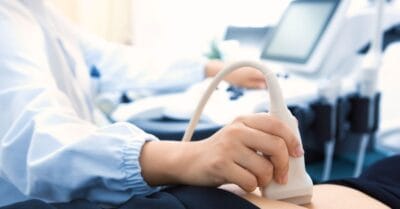

The liver plays a vital role in filtering toxins, digesting fats, and storing essential nutrients. Yet, many liver diseases such as fatty liver, hepatitis, and cirrhosis can develop silently until serious damage has occurred. That is why early detection is key. Liver elastography has become one of the most advanced, non-invasive tests available for assessing liver health.
Concerned About Your Liver Health? Book An Appointment For A Consultation
What Is Liver Elastography?
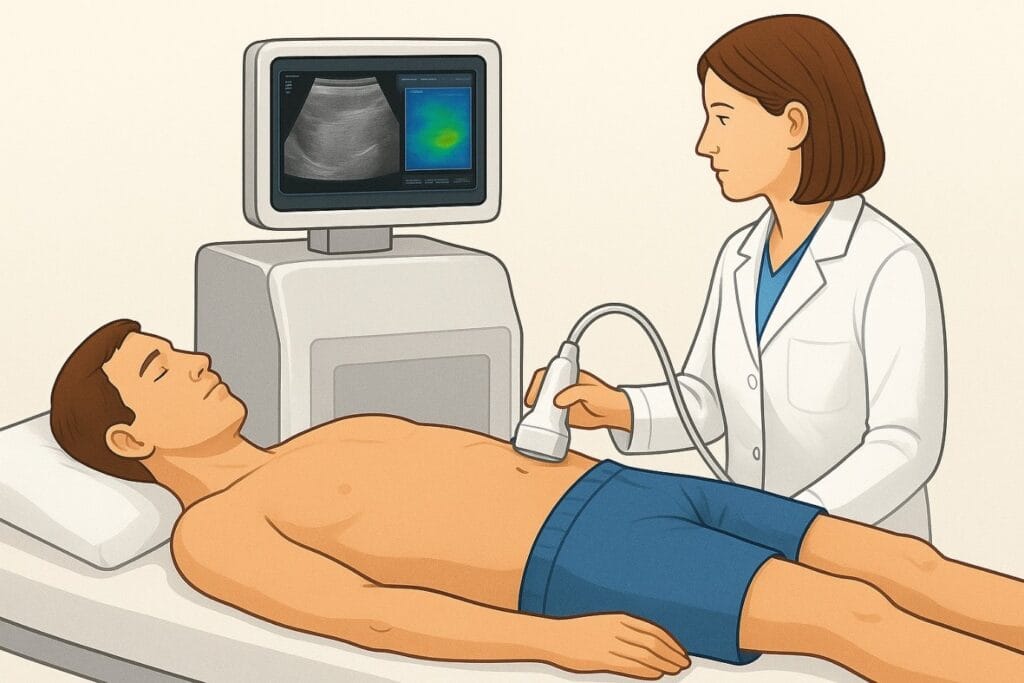
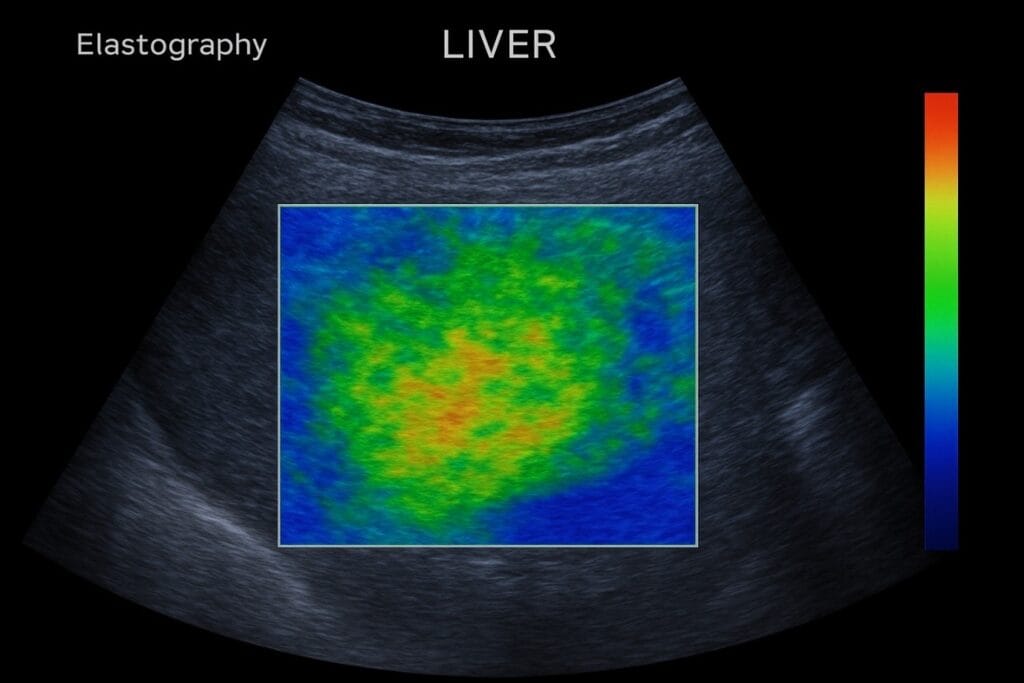
Liver elastography is an imaging test that evaluates the stiffness of liver tissue. In simple terms, it works much like a high-tech ultrasound. During the procedure, sound waves or vibrations are sent into the liver. The machine then measures how fast these waves travel — the faster the waves, the stiffer the liver tissue.
Liver stiffness is directly linked to fibrosis, which occurs when healthy liver tissue is replaced by scar tissue due to inflammation or injury. Detecting stiffness early can help doctors diagnose and monitor chronic liver diseases long before symptoms become severe.
There are two main types of elastography:
- Ultrasound-based elastography, often performed in clinics and hospitals.
- Magnetic resonance elastography (MRE), which combines MRI imaging with vibration waves for a more detailed map of liver stiffness.
Both methods are completely non-invasive and typically take 10 – 30 minutes.
What Conditions Can Liver Elastography Detect?
Liver elastography is a valuable tool in identifying and monitoring cirrhosis and advanced fibrosis. As scarring worsens, the liver becomes increasingly stiff. Elastography is one of the best ways to stage fibrosis and detect cirrhosis, which can be caused by a wide range of liver conditions:
- Fatty Liver Disease (NAFLD and NASH)
Non-alcoholic fatty liver disease (NAFLD) and its more severe form, non-alcoholic steatohepatitis (NASH), are increasingly common due to rising obesity and diabetes rates. Elastography can detect liver stiffness caused by fat accumulation and inflammation early, when lifestyle changes can still reverse the damage. - Hepatitis B And C
Chronic viral hepatitis can lead to fibrosis and cirrhosis over time. Elastography helps monitor disease progression and evaluate how well treatments are working without the need for repeated biopsies. - Alcohol-Related Liver Disease
Long-term alcohol consumption can cause liver inflammation and scarring. Elastography provides a clear picture of liver stiffness, helping patients understand the extent of damage from alcohol intake. - Liver Damage From Other Causes
This includes autoimmune hepatitis, drug-induced liver injury, or genetic disorders such as haemochromatosis.
Who Is Liver Elastography For?
Liver elastography is recommended for anyone at risk of liver disease or with abnormal liver blood test results. It is particularly useful for:
- People with obesity, diabetes, or high cholesterol.
- Those with a history of heavy alcohol use.
- Patients with hepatitis B or C infections.
- Individuals on long-term medications that may affect the liver.
- Anyone with unexplained fatigue or abnormal liver function blood test.
It is also valuable as a routine check-up tool for those who want reassurance about their liver health. Unlike a biopsy, there is no recovery time, anaesthetic, or needle involved.
How Liver Elastography Differs From A Typical Liver Ultrasound
While a standard liver ultrasound creates images that show the size, shape, and general appearance of the liver, it cannot accurately measure how stiff or healthy the tissue is. Liver elastography goes a step further by quantifying the elasticity (or flexibility) of liver tissue — an early marker of fibrosis and scarring. This added layer of information allows doctors to detect problems that might not yet be visible on regular scans.
Liver Elastography Vs. FibroScan: What’s The Difference?
The term “FibroScan” is often used interchangeably with liver elastography, but there are subtle differences worth understanding.
FibroScan is a brand name for one specific type of ultrasound-based liver elastography device, known as transient elastography. It uses a small probe placed on the skin, which sends painless vibrations through the liver. The results are immediate and give a stiffness score that helps doctors assess fibrosis levels.
Liver elastography, on the other hand, is a broader term that includes various technologies used to measure liver stiffness, such as shear wave ultrasound elastography and MR elastography.
Both provide accurate, non-invasive ways to evaluate liver health. MR elastography may offer more detailed imaging for complex cases.
Contact Us To Book A Liver Elastography
What To Expect During The Test
The test is simple and completely pain-free:
- You will lie on your back with your right arm raised.
- A water-based gel is applied to your skin to help the probe make contact.
- The device sends gentle vibrations or sound waves into your liver.
- The machine analyses how the waves move through the liver tissue and calculates a stiffness score.
The procedure is quick, safe. You can resume normal activities immediately afterwards.
Frequently Asked Questions (FAQs)
For many patients, yes. Elastography is non-invasive, painless, and carries no risk of bleeding or infection. However, in some complex cases, a biopsy may still be necessary to confirm diagnosis or identify specific cellular changes.
It depends on your risk factors. Patients with chronic conditions like hepatitis or fatty liver may be advised to have it once every 1-3 years, while others might only need it as part of a routine screening.
Yes — in many cases. Early-stage liver disease caused by fat accumulation, alcohol use, or viral infections can often be improved with treatment and lifestyle changes. Early detection through elastography is the first step toward recovery.
Prevention Through Early Detection
Liver elastography has transformed how doctors assess liver health. It offers a fast, accurate, and painless alternative to traditional methods, making early detection and monitoring of liver disease easier than ever.
If you have risk factors like obesity, diabetes, or a family history of liver disease, speak to your gastroenterologist about scheduling a liver elastography test. It’s a simple step that can protect your liver and your health for years to come.
Book A Consultation With Dr Juanda On Your Liver Health
Useful References:
- Optimal liver stiffness measurement values for the diagnosis of significant fibrosis and cirrhosis in chronic liver disease in Singapore | National Library Of Medicine
- Guideline/Guidance on Liver Multiparametric Ultrasound | National Library Of Medicine