

Helicobacter pylori (H. pylori) is a spiral-shaped bacterium that lives in the stomach lining. It can be present without causing symptoms, but for many people, it leads to inflammation of the stomach (gastritis) and can damage the protective mucosal layer. Over time, this can increase the risk of stomach ulcers and eventually the risk of stomach cancer.
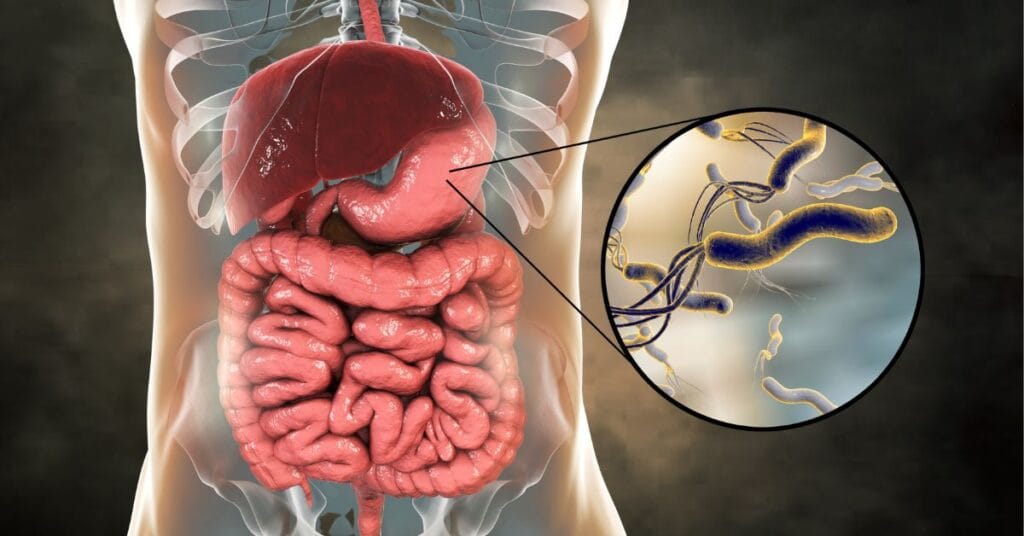
Early detection through an H pylori test is important for preventing complications and ensuring timely treatment.
Stomach Pain? Contact Us For An Appointment With Dr Juanda.
How Common Is H. Pylori In Singapore?
H. pylori is one of the most common bacterial infections globally. It is particularly prevalent in Asia. For H. pylori infection in Singapore, studies estimate that about 30% of the population may be affected. The infection is often acquired during childhood and it may persist for decades unless treated. Because it can remain silent for years, it is important to be aware of the condition and undergo appropriate testing. This is especially if you have persistent digestive symptoms.
What Are The Symptoms Of H. Pylori Infection?
Many people with H. pylori have no symptoms at all. When symptoms do occur, they may include:
- Persistent or recurring stomach pain or discomfort
- Bloating
- Nausea or vomiting
- Loss of appetite
- Unexplained weight loss
- Black or tarry stools (a possible sign of bleeding)
These H. pylori symptoms can overlap with other digestive conditions, which is why an accurate H pylori test is essential for a clear diagnosis.
Why Should You Test For H. Pylori Infection?
Testing for H. pylori infection is important because untreated infection can lead to complications such as peptic ulcers and chronic gastritis. In some cases, it may also increase the risk of stomach cancer. Early detection allows doctors to start treatment promptly before more serious problems develop.
What Are The H. Pylori Tests?
Doctors use several methods to diagnose H. pylori:
- Urea Breath Test – This is a simple, non-invasive test in you drink a harmless solution containing urea. If H. pylori is present, it will break down the urea and produce carbon dioxide that can be detected in your breath.
- Stool Antigen Test – This test detects H. pylori proteins in a stool sample. It is also non-invasive and widely used.
- Blood Antibody Test – This test measures antibodies to H. pylori in your blood. However, while the presence of antibodies can indicate if you have been infected, but is less useful for determining if the infection is current.
- Endoscopy With Biopsy – In cases where further investigation is needed, a gastroenterologist may perform an endoscopy to directly examine the stomach lining and take a tissue sample for testing.
Your doctor will recommend the most suitable H pylori test based on your symptoms, medical history, and whether you have been treated before.
Why Should You See A Gastroenterologist For Testing And Symptoms?
Gastroenterologists have specialised expertise in digestive health. Their in-depth training in identifying and managing complex or persistent gastrointestinal conditions.
A gastroenterologist can:
- Offer advanced diagnostic procedures, including endoscopy
- Interpret subtle findings that might indicate more serious conditions
- Tailor treatment to your individual needs, particularly if previous treatments have failed
- Monitor your long-term digestive health if you are at higher risk of complications
Get An Appointment If You Have Symptoms Or Are Concerned About H. Pylori Infection
If you have ongoing stomach discomfort, bloating, or other digestive symptoms, you should see a doctor and possibly undergo an H. pylori test. Early detection and treatment can prevent complications.
Book your appointment to see Dr Juanda Leo Hartono
Frequently Asked Questions (FAQs) On H. Pylori Infection
An H. pylori test can be done using non-invasive methods such as a urea breath test or stool antigen test, or through an endoscopy if more detailed investigation is needed. Your doctor will recommend the most suitable test based on your symptoms and medical history.
H. pylori infection usually does not go away on its own. It can persist for many years and may lead to complications such as ulcers or chronic gastritis if left untreated. Medical treatment with antibiotics and acid-reducing medication is the most effective way to eradicate the bacteria.
You should seek medical advice if you have persistent or recurring stomach pain, bloating, nausea, unexplained weight loss, black stools, or vomiting blood. An H. pylori test may be recommended to identify if the infection is the cause of your symptoms.
Useful Reference:
Global prevalence of Helicobacter pylori infection between 1980 and 2022: a systematic review and meta-analysis | The Lancet

